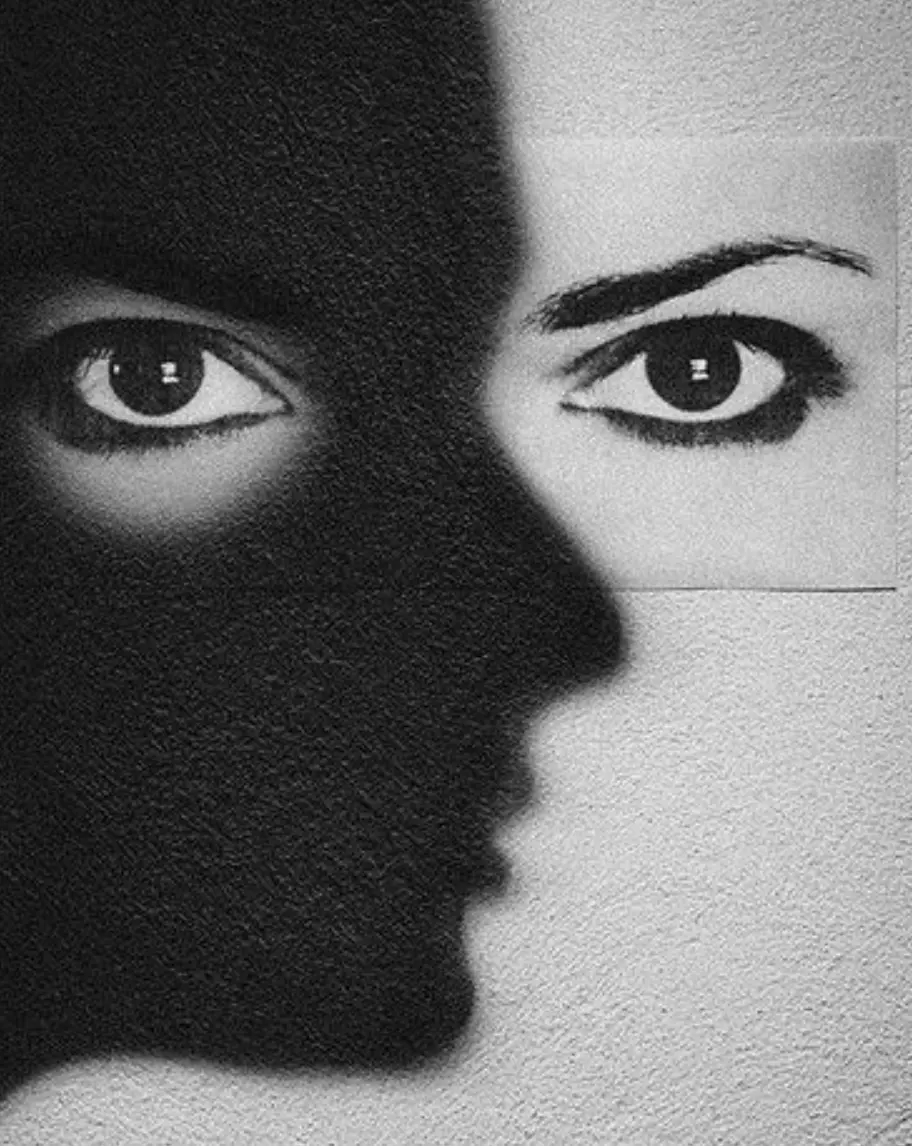
Strange relationship with darkness.
People here like to believe that they know the difference between good and evil. They point at criminals, cultists, violent men, corrupt officials, and anyone else who crosses the invisible line separating acceptable from unacceptable. They condemn them. They distance themselves from them.
But what if some of that hatred isn't really about the person standing in front of us?
What if, sometimes, we hate people because they display something we have buried inside ourselves?
Psychologists have a name for this idea: projection.
Projection occurs when we refuse to acknowledge certain desires, emotions, or impulses within ourselves and instead begin seeing them in someone else. We accuse them of being arrogant because we cannot admit our own need for superiority. We call someone controlling while secretly wanting control ourselves. We condemn another person's selfishness while hiding our own selfish desires.
Havenfall is particularly good at this.
People here are expected to behave correctly. To appear kind. To appear reasonable. To suppress anger, jealousy, ambition, resentment, and anything else that might make them look ugly.
But suppressing something doesn't make it disappear.
It simply gives it somewhere to hide.
The Person We Love to Hate
Think about the person you dislike most.
Perhaps they're arrogant.
Perhaps they're aggressive.
Perhaps they're selfish, manipulative, ambitious, or shameless.
Now ask yourself something uncomfortable:
What if the reason they bother you so much is because they express something you secretly wish you could express?
This doesn't mean every hatred is projection. Sometimes people genuinely behave terribly, and recognizing harmful behavior is necessary.
But sometimes the reaction is disproportionate.
A person makes one arrogant remark, and suddenly we cannot stand them.
Someone confidently pursues what they want, and we call them selfish.
Someone refuses to apologize, and we obsess over how horrible they are.
Meanwhile, somewhere inside us may be a suppressed desire to do exactly the same thing.
The difference is that they allowed themselves to express it.
We didn't.
And that can create resentment.
Havenfall's Culture of Niceness
Havenfall prides itself on being civilized.
People are expected to be polite. Students are expected to behave. Workers are expected to remain professional. Families are expected to maintain appearances.
But there is a strange consequence to constantly performing goodness.
The parts of ourselves that don't fit the performance have nowhere to go.
Anger becomes resentment.
Envy becomes criticism.
Insecurity becomes superiority.
Fear becomes hatred.
And eventually, the suppressed emotion leaks out.
Sometimes it happens through small things.
A cruel joke.
An unnecessary argument.
A sudden outburst.
A person becoming strangely obsessed with someone they claim to despise.
The Shadow rarely announces itself.
It leaks.
The Entertainment of Darkness
There is another strange contradiction.
People may insist that they despise cruelty, manipulation, murder, corruption, and madness.
Yet those same people can spend hours watching stories about them.
Havenfall's citizens consume stories about serial killers, mysterious cults, manipulative villains, corrupt leaders, and people who abandon every rule society has given them.
Why?
Because darkness is fascinating.
A fictional villain can say what we would never say.
They can be selfish when we are expected to be selfless.
They can seek power when we are expected to remain humble.
They can destroy relationships, break rules, manipulate people, and pursue their desires without pretending to be good.
And the audience gets to experience all of it safely.
Then, when the episode ends, we can return to our ordinary lives and say:
"What a horrible person."
Perhaps that's true.
But perhaps part of us was enjoying the freedom.
When the Shadow Finds a Leader
The danger becomes greater when the Shadow leaves the individual and enters a crowd.
A person might normally control their anger.
A crowd doesn't have to.
A person might hesitate to hate someone.
A group can teach them whom to hate.
A person might never insult a stranger.
Give them a cause, a leader, and enough fear, and suddenly cruelty can become righteousness.
This is why charismatic figures can become so dangerous.
They don't necessarily create people's darkest emotions.
Sometimes they simply give those emotions permission to come outside.
They tell people that their anger is justified.
Their resentment is justified.
Their fear is justified.
Their hatred has a target.
And suddenly the person who believed themselves to be peaceful can participate in things they would never have done alone.
The Shadow has found a crowd.
The Jekyll Problem
Perhaps the most famous story about this is The Strange Case of Dr. Jekyll and Mr. Hyde.
Dr. Jekyll is respectable.
Educated.
Wealthy.
Civilized.
Everything society expects a good man to be.
And yet inside him exists another side—the part he refuses to acknowledge.
He creates a way to separate that side from himself, transforming into Mr. Hyde.
Hyde becomes everything Jekyll refuses to be.
Violent.
Cruel.
Sensual.
Unrestrained.
But Hyde doesn't come from nowhere.
He comes from Jekyll.
The monster isn't an outside invasion.
It is the part of himself he refused to look at.
That is the frightening lesson.
The more desperately we insist that we are nothing like the darkness, the less capable we may become of recognizing it when it appears within us.
So What Do We Do With Our Shadow?
The answer isn't to become cruel.
It isn't to stop caring about morality.
And it certainly isn't to give our worst impulses complete freedom.
The answer is awareness.
If you know you are capable of jealousy, you can recognize jealousy before it controls you.
If you know you crave recognition, you don't have to pretend that you don't.
If you know you sometimes want control, you can recognize that desire before turning someone else into a villain for wanting the same thing.
The Shadow becomes dangerous when it is invisible.
Once we can see it, we can choose what to do with it.
Perhaps that's what Havenfall needs most.
Not perfect people.
Not people who pretend to be angels.
Just people willing to look into themselves and admit:
There are things inside me that I don't like.
And perhaps that admission is not weakness.
Perhaps it is the beginning of becoming whole.
Because the darkest part of a person isn't necessarily the part that must be destroyed.
Sometimes...
it's the part that must finally be understood.